Policy. Community. Land. Culture. Five areas of work — one connected inquiry into Sindh.
CAC is Pakistan's leading climate action organisation, working at the intersection of policy, community mobilisation, and urban climate adaptation. As Program Manager, I lead programme design and delivery across climate resilience, sustainability, and the Karachi climate agenda.
My work at CAC connects directly to the Indus River framing at the heart of Climate Week Karachi 2026 — linking the city's climate vulnerabilities to the broader crisis of the river system that sustains it. Karachi's flooding, water supply, and heat dynamics are downstream consequences of Indus management decisions made hundreds of kilometres away.
At CAC I work across programme development, stakeholder engagement with Sindh government institutions and civil society, policy analysis, and external partnerships. The role sits at the intersection of everything I have studied and everything I have built on the ground.

Unwind at Gharo is a cultural agritourism initiative on the Indus delta, approximately 90 minutes from Karachi. It exists on a conviction: that the most important environmental work is not just policy or science — it is building relationships between people and land.
The farm is organised around eight experiential zones, each named in Sindhi and designed around a different dimension of the delta's cultural ecology. The Dastarkhwan centres Sindhi food tradition. The Shamyana creates space for conversation. The Khamooshi — silence — gives visitors room to simply be in the landscape.
The annual Gharo Festival brings together musicians, artists, craftspeople, and communities for two intentional days on the farm. I co-run Unwind with my co-founder Seerat, who leads the creative and visual direction.
Unwind is a model: land use that is economically sustainable, culturally rooted, and ecologically careful — built on the same delta whose ecology I study and whose communities I advocate for.
The eight zones
Dharti — 'earth' in Sindhi and Urdu — Foundation works in education and community development across Sindh. The foundation is built on a simple conviction: that communities already hold the knowledge needed to address their own challenges. Our work creates the conditions for that knowledge to be heard, applied, and scaled.
Dharti's programming spans formal education support, community advocacy training, local governance capacity-building, and the documentation of ecological knowledge held in Sindhi communities — the kind of knowledge that doesn't appear in policy documents but determines whether programmes work or fail.
Dharti's programmes
A community school built in vernacular Sindhi timber architecture. The building itself is a pedagogical argument — that learning environments shaped by local knowledge produce a different relationship to education than concrete classrooms imposed from outside.
Coordination with a network of community and government schools across Sindh — providing teacher support, curriculum materials, and connections to civil society. Focus on rural and underserved districts where state provision is weakest.
A community library in Ratodero, Larkana district — providing access to Sindhi and Urdu literature and educational resources in one of interior Sindh's most underserved districts, where public library infrastructure is almost entirely absent.
Structured advocacy and community organising training for village leaders and youth — building the capacity of communities to engage with government institutions and hold development actors accountable.
Working with communities to document traditional ecological knowledge of kacho and riverine communities — seasonal flood patterns, fishing practices, agricultural calendars. This knowledge is disappearing as climate disruption alters the conditions it was built around.
Sindhi language literacy and cultural heritage programming — supporting reading in Sindhi, documenting oral traditions, and connecting younger generations to the literary and philosophical heritage of the Sindhi tradition.
I manage approximately 350 acres of agricultural land in Khairpur District, divided between kacho (seasonal floodplain) and pakka (higher ground) plots. The land has been in the family for generations, managed through a combination of sharecropping arrangements and direct cultivation.
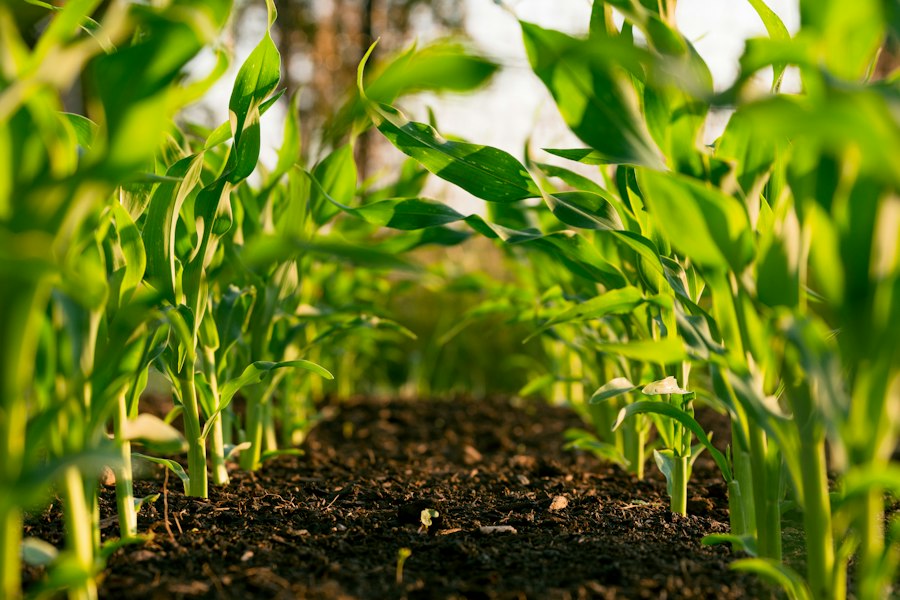
My approach to farming is deliberate: I practice organic and regenerative methods on the land I directly manage, working against the dominant logic of chemical input-heavy monoculture that has degraded Sindh's agricultural soils over four decades. This is a minority position locally. It is also a practical argument — that soil health and long-term productivity are inseparable.
Managing kacho land means managing uncertainty. The floodplain plots flood — sometimes partially, sometimes completely. Planting decisions are made under real risk. The 2027 lease takeback window on key plots will bring new decisions about how this land is farmed over the next decade.
Farming is not separate from my policy work. It is where I encounter, in the most direct and personal way, the consequences of the decisions I write about. When I argue for kacho communities, I do so as someone who also manages kacho land — and who understands the difference between arguing for a policy and living inside its consequences.
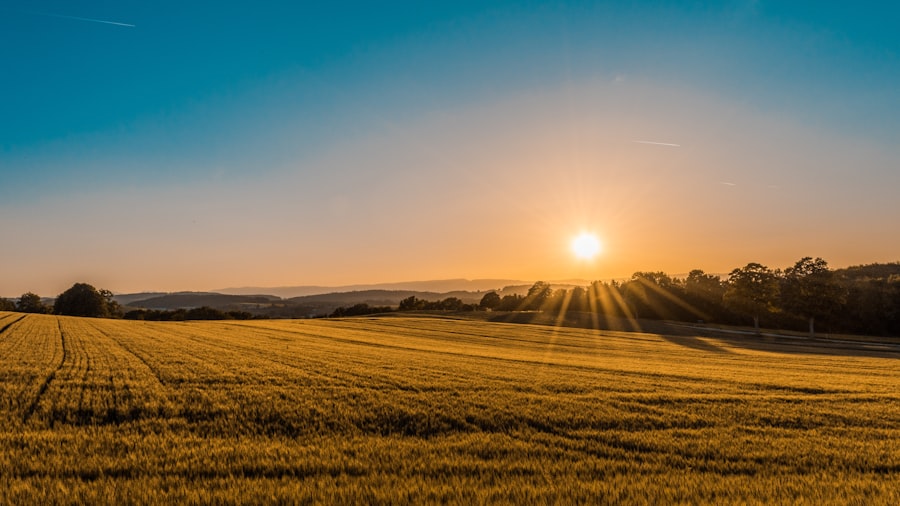
I write about places. Not the places of tourist guides — the places that have a texture, a politics, a particular quality of light at a particular time of year that changes how you think about everything else. The Sindh delta at dusk. The road between Khairpur and Karachi in August. The Lake District in October, seen from a different direction.
My photography is documentary in orientation: I am interested in what places look like when nobody is performing for the camera. The patterns of work and rest. The way infrastructure — a barrage, a canal, a school — sits in a landscape. Agricultural land across seasons.
Travel writing and photography are an extension of the same practice as field research: paying close, specific attention to a place and trying to communicate what you found there honestly. No stock images. No generic descriptions. No reaching for easy beauty when the reality is more complex and more interesting.
I have written from Pakistan's interior, the Indus delta, the UK, and the spaces in between. Future writing will expand to the wider region — places connected to Sindh by water, by history, and by the same political ecology of rivers, borders, and communities.
View travel writing archive →